


Selection Notes
- Temper can be as important as grade in aluminium RFQs.
- For profiles, drawings help avoid ambiguity.
- For 7075, buyers should state strength, tolerance and end-use context.

Compare aluminium 6061, 6063 and 7075 for automotive, fabrication, aerospace or precision and structural RFQs with buyer checklist guidance.
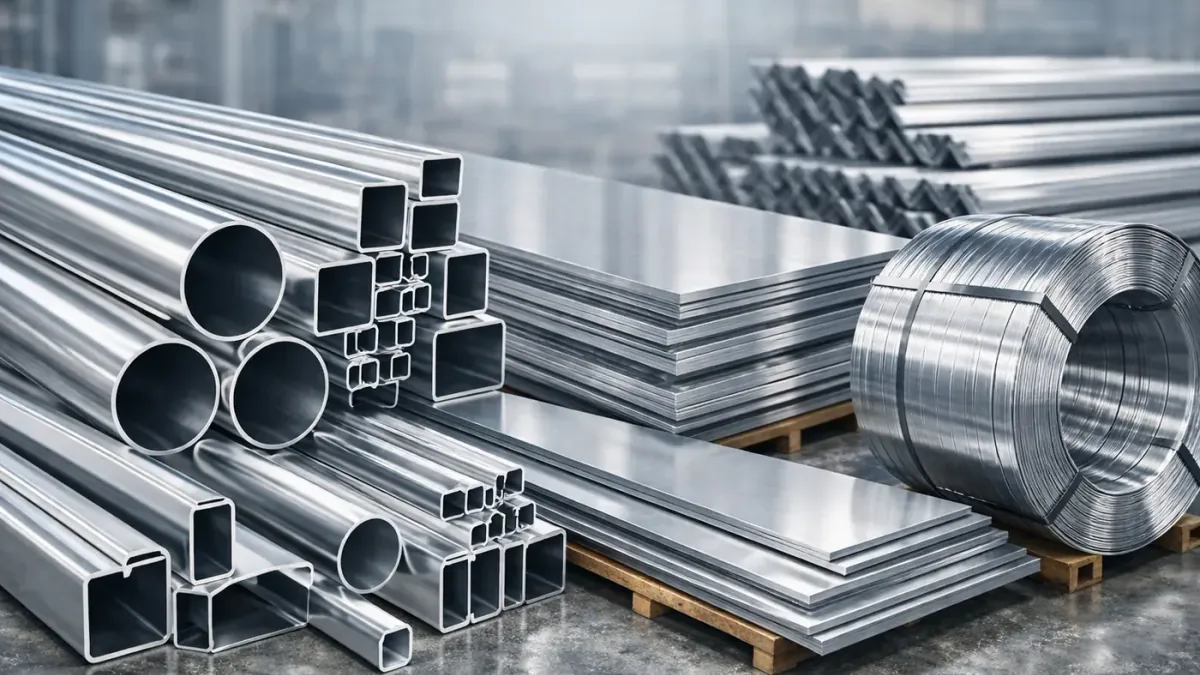
Aluminium 6061 is commonly reviewed for general engineering and machining, 6063 for extrusion and architectural profiles, and 7075 for high-strength precision applications. Final selection should follow buyer drawings, standards, service conditions and project requirements.
| Option | Common buyer review context | RFQ note |
|---|---|---|
| Aluminium 6061 | Machining, fabrication, frames and general engineering | Mention temper and tolerance. |
| Aluminium 6063 | Extrusions, profiles and architectural work | Share profile drawing and finish. |
| Aluminium 7075 | High-strength machined or precision parts | Share drawing, temper and inspection need. |
Use these pages to review grades, material families and quotation routes before sending a requirement.
Aluminium 6061 and 7075 are commonly reviewed for machining, depending on strength and tolerance requirements.
6063 is commonly reviewed for extrusion profiles and architectural or fabrication work.
Temper affects mechanical properties and should be included when specified by drawing or project requirement.
Buyers can share cut-size lists or drawings for RFQ review where applicable.
Share grade, temper, form, size, quantity, finish and delivery location.
Share grade, product form, size, quantity, standard, documentation requirements and delivery location for quotation review.