


Titanium RFQ Pathways
Move from this material family overview to the right grade, product form, technical resource or quotation path without changing the page's primary supplier intent.

Rubinox Metal and Alloys supplies titanium grades including Grade 1, Grade 2, Grade 5 (Ti-6Al-4V) and Grade 23 in pipes, tubes, sheets, plates, bars, rods, flanges and fasteners for marine, aerospace, chemical processing and high-performance industrial applications across India and export markets.
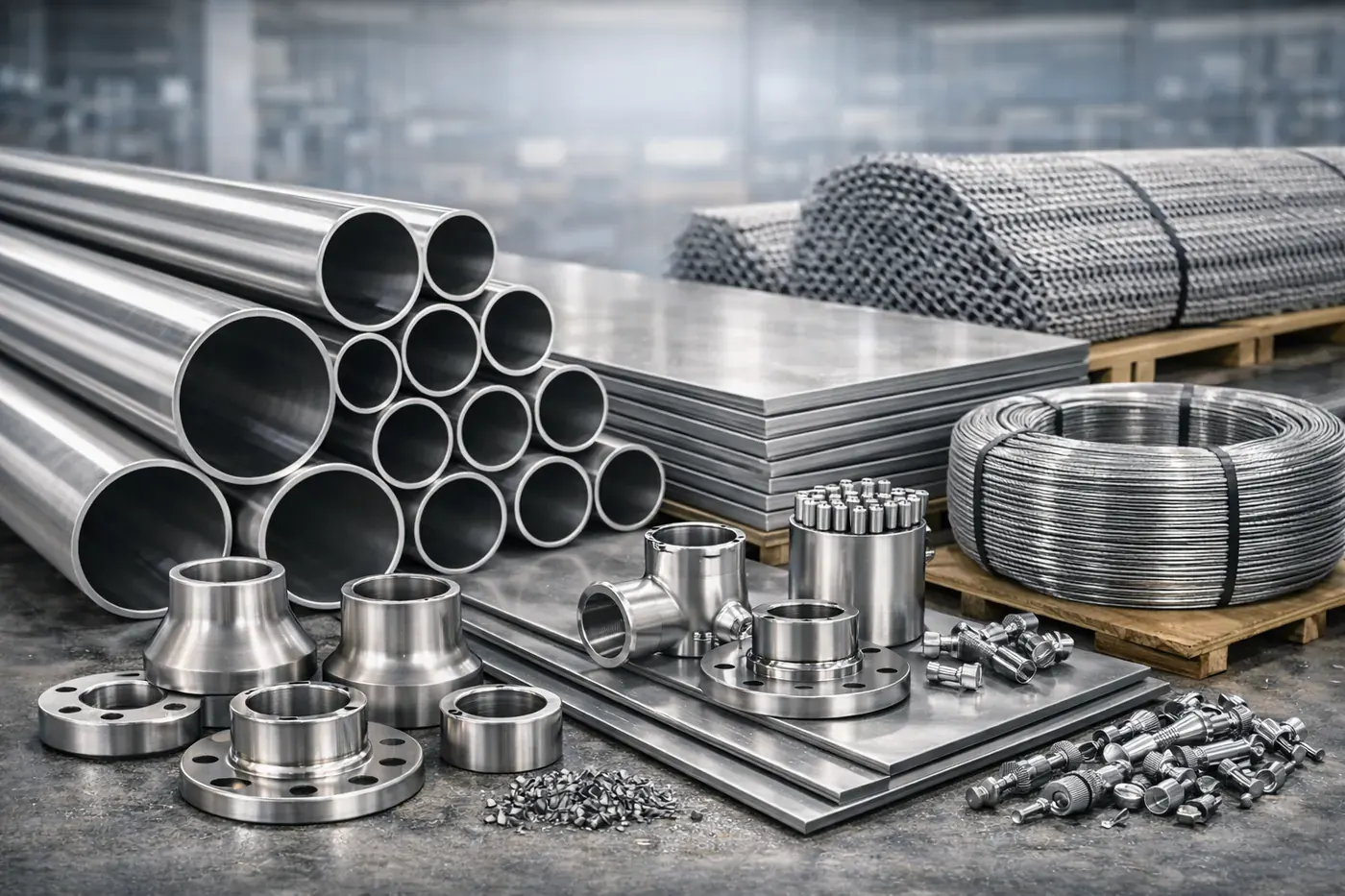
Pipes & Tubes • Sheets & Plates • Bars & Rods • Flanges • Fittings • Fasteners • Coils • Flats • Circles
| Grade | Type | UNS Reference | Typical ASTM References | Common Buyer Use |
|---|---|---|---|---|
| Grade 1 | Commercially pure titanium | UNS R50250 | ASTM B265, B338, B348 and B381 as applicable | Maximum formability, corrosion-resistant sheets, plates, strips and formed components. |
| Grade 2 | Commercially pure titanium | UNS R50400 | ASTM B265, B338, B348, B861, B862 and B381 as applicable | General-purpose corrosion resistance for chemical, marine, heat exchanger and industrial equipment. |
| Grade 5 | Ti-6Al-4V alloy | UNS R56400 | ASTM B265, B348, B381 and F1472 as applicable | High-strength aerospace, fasteners, machined parts, structural and performance components. |
| Grade 23 | Ti-6Al-4V ELI | UNS R56407 | ASTM F136, B348 and B265 as applicable | Medical, surgical-related, precision, aerospace and high-integrity applications where specified. |
Final grade selection should follow the drawing, project specification, service environment, testing scope and documentation requirement. Titanium Grade 5 or Grade 23 is not automatically better than commercially pure titanium; each grade serves a different procurement need.
| Factor | Titanium | Stainless Steel | Buyer Note |
|---|---|---|---|
| Weight | Lower density and strong strength-to-weight positioning. | Generally heavier for the same component volume. | Titanium is often reviewed when weight reduction is important. |
| Corrosion service | Commonly selected for seawater, chemical and chloride-related service where specified. | Broad grade range from general fabrication to high-alloy corrosion service. | The right material depends on grade, environment, temperature and design. |
| Fabrication | Requires grade-aware machining, welding and handling controls. | Widely fabricated across general industrial shops. | Share drawings and fabrication notes when requesting titanium. |
| Commercial fit | Application-driven selection for specific high-performance needs. | Often practical for general industrial, structural and process requirements. | Rubinox can help review the enquiry details without assuming one material suits every case. |
Titanium enquiries should mention the grade, UNS number, product form, ASTM or project standard, size, finish, testing and documentation requirement. Common references include:
Rubinox can review titanium enquiries across common mill forms and project-specific forms based on grade, standard, size, quantity and documentation needs.
| Product Form | Typical Grades | Buyer Details |
|---|---|---|
| Sheets, plates and strips | Grade 1, 2, 5, 23 | Thickness, width, length, finish and ASTM B265 requirement. |
| Pipes and tubes | Grade 2 and project-specified grades | OD, wall thickness, schedule, length, ASTM B338, B861 or B862. |
| Bars and rods | Grade 2, 5, 23 | Diameter, length, tolerance, ASTM B348 and machining requirement. |
| Flanges, fittings and fasteners | Grade 2, 5 and project-specified grades | Class, size, drawing, ASTM B381 or project specification. |
Titanium Grade 5 is commonly reviewed for aerospace and high-performance engineering components where strength-to-weight ratio, corrosion resistance and project specifications justify titanium alloy selection. Grade 23 may be considered where ELI requirements, precision parts or high-integrity documentation are specified.
Titanium Grade 23, also known as Ti-6Al-4V ELI, is commonly specified for medical, surgical-related and precision applications where the buyer defines the correct standard, certificate and traceability requirement. Rubinox does not provide regulatory certification; buyers should share the exact standard and documentation scope.
Titanium Grade 2 is a common workhorse for corrosion-resistant industrial service, including chemical processing, marine equipment, condensers and heat exchangers. Grade 1 may be reviewed when formability is the main requirement, while alloy grades are selected when strength or project standards require them.
A complete titanium enquiry should include the details needed to identify the correct material, route, inspection scope and delivery requirement.
Rubinox can support enquiries for Titanium Grade 1, Grade 2, Grade 5 and Grade 23 in common product forms such as sheets, plates, pipes, tubes, bars, rods, flanges, fittings, fasteners and drawing-based components.
Grade 1 is commercially pure titanium with excellent formability, while Grade 2 is a widely used commercially pure grade for corrosion-resistant industrial service. The right grade depends on strength, formability, standard, size and application requirements.
Grade 5 is Ti-6Al-4V, a high-strength titanium alloy used for aerospace, fasteners, machined parts and performance components. Grade 23 is Ti-6Al-4V ELI and is often specified where ELI chemistry, precision or medical-related standards are required.
Titanium Grade 2 is commonly associated with UNS R50400. Buyers should mention the grade, UNS reference, ASTM or project specification, product form, size and testing requirement when sending an enquiry.
Common titanium standards include ASTM B265 for sheet and plate, ASTM B338 for tubes, ASTM B348 for bars, ASTM B381 for forgings, ASTM B861 for seamless pipe and ASTM B862 for welded pipe. Medical-related alloy enquiries may specify ASTM F136 or ASTM F1472 where applicable.
Titanium Grade 5 and selected titanium alloys are commonly reviewed for aerospace and high-performance engineering applications because of their strength-to-weight ratio and corrosion resistance. Final suitability depends on the buyer drawing, material specification, testing and documentation requirement.
Titanium Grade 23 is often specified for medical, surgical-related and precision applications where the buyer defines the correct standard and certificate requirement. Rubinox does not provide regulatory certification; buyers should share the required specification and documentation scope.
Titanium Grade 2 is commonly reviewed for chemical processing, marine, heat exchanger and condenser applications due to its corrosion-resistant positioning. Grade selection should still follow service conditions, project standards, fabrication needs and inspection requirements.
Share the grade, UNS reference if available, ASTM or project standard, product form, size, quantity, finish, testing or certificate requirement, application, delivery location and timeline. Drawings are helpful for machined or custom components.
Rubinox can support enquiries where material test certificates, traceability, PMI, third-party inspection or dimensional documentation are required. Certificate and inspection requirements should be shared clearly at enquiry stage.
Move from this material family overview to the right grade, product form, technical resource or quotation path without changing the page's primary supplier intent.
Share grade, ASTM/UNS reference, product form, size, surface condition, quantity, application environment and required documents.
Use these Knowledge Hub and technical links to prepare a clearer enquiry before sharing quantity and destination details.
Share grade or specification, product form, size, quantity, standard, MTC/PMI or inspection needs, delivery location and timeline for Rubinox quotation support.